(Limes)
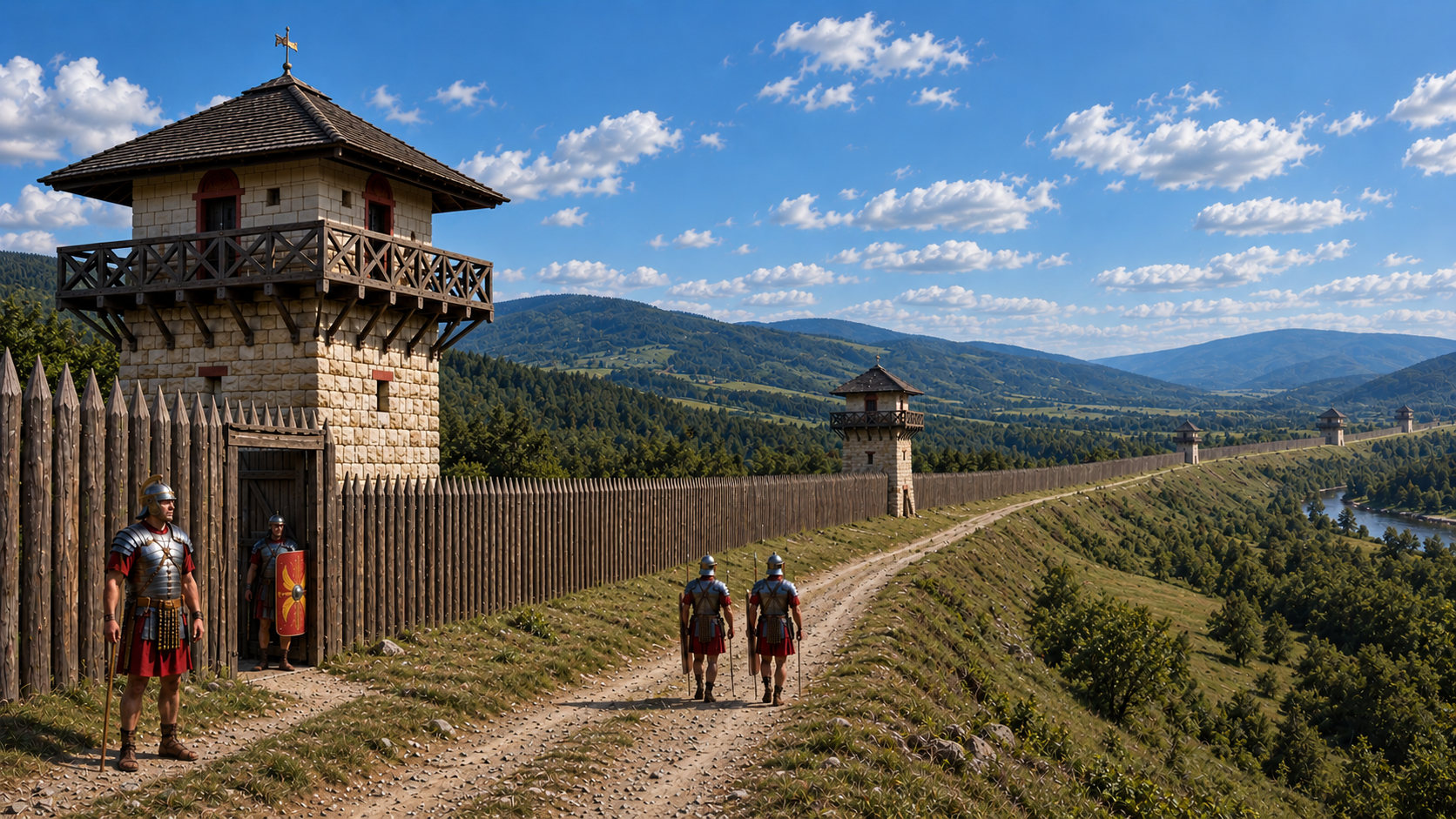
During the expansion of Rome, the borders of the Empire increasingly had to be secured. This led to fortifications and frontier surveillance systems of enormous dimensions.
Limes
Length: 548 km, height: 2.00–3.00 m, forts: 60, towers: 900
Frontier soldiers: approx. 40,000 men
Frontier soldiers: approx. 40,000 men
(Hadrian’s Wall)
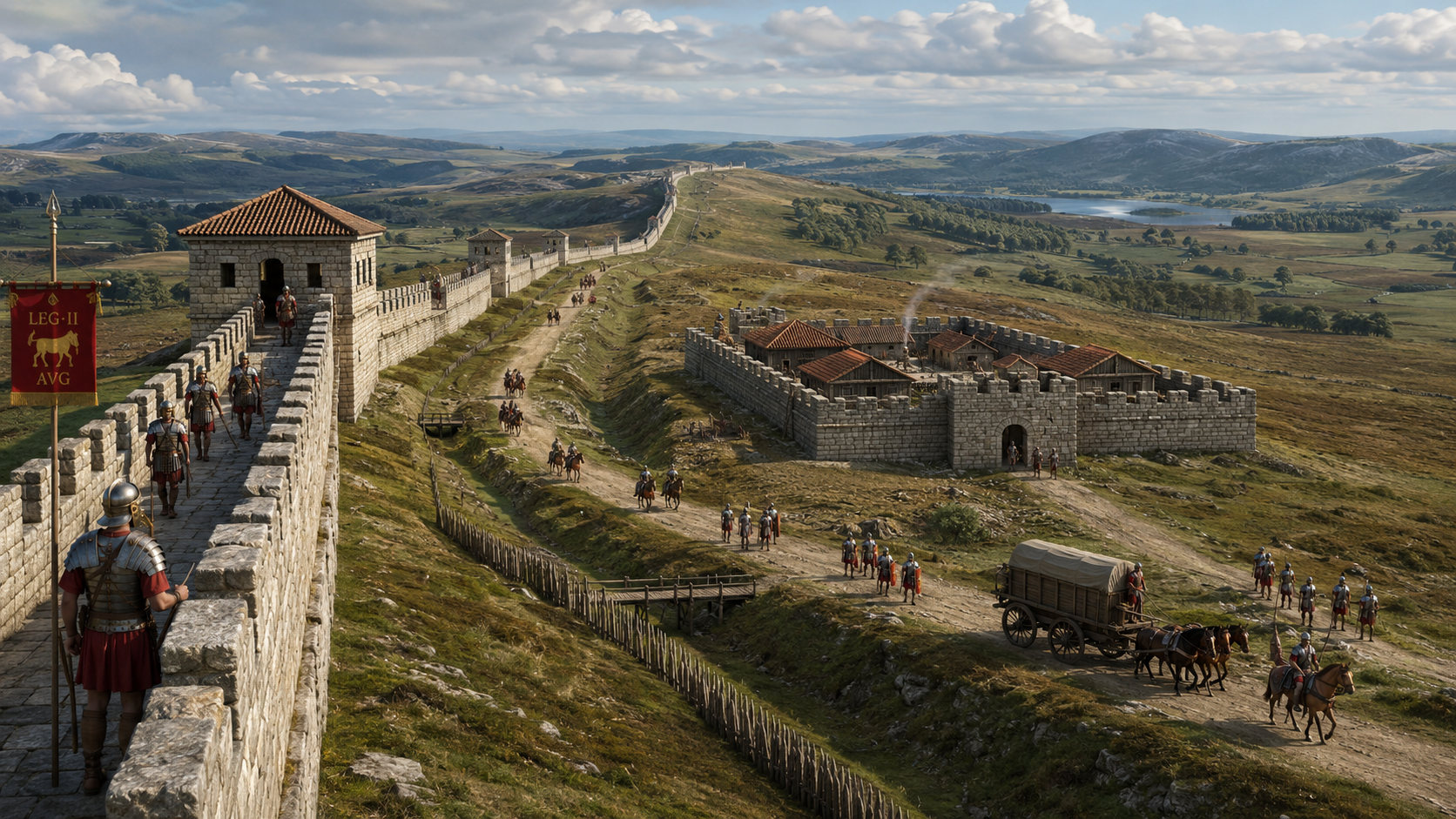
Hadrian’s Wall
Length: 120 km, height: 4.50 m, width: 3 m, forts: 17, gates: 80, towers: 320
(Antonine Wall)
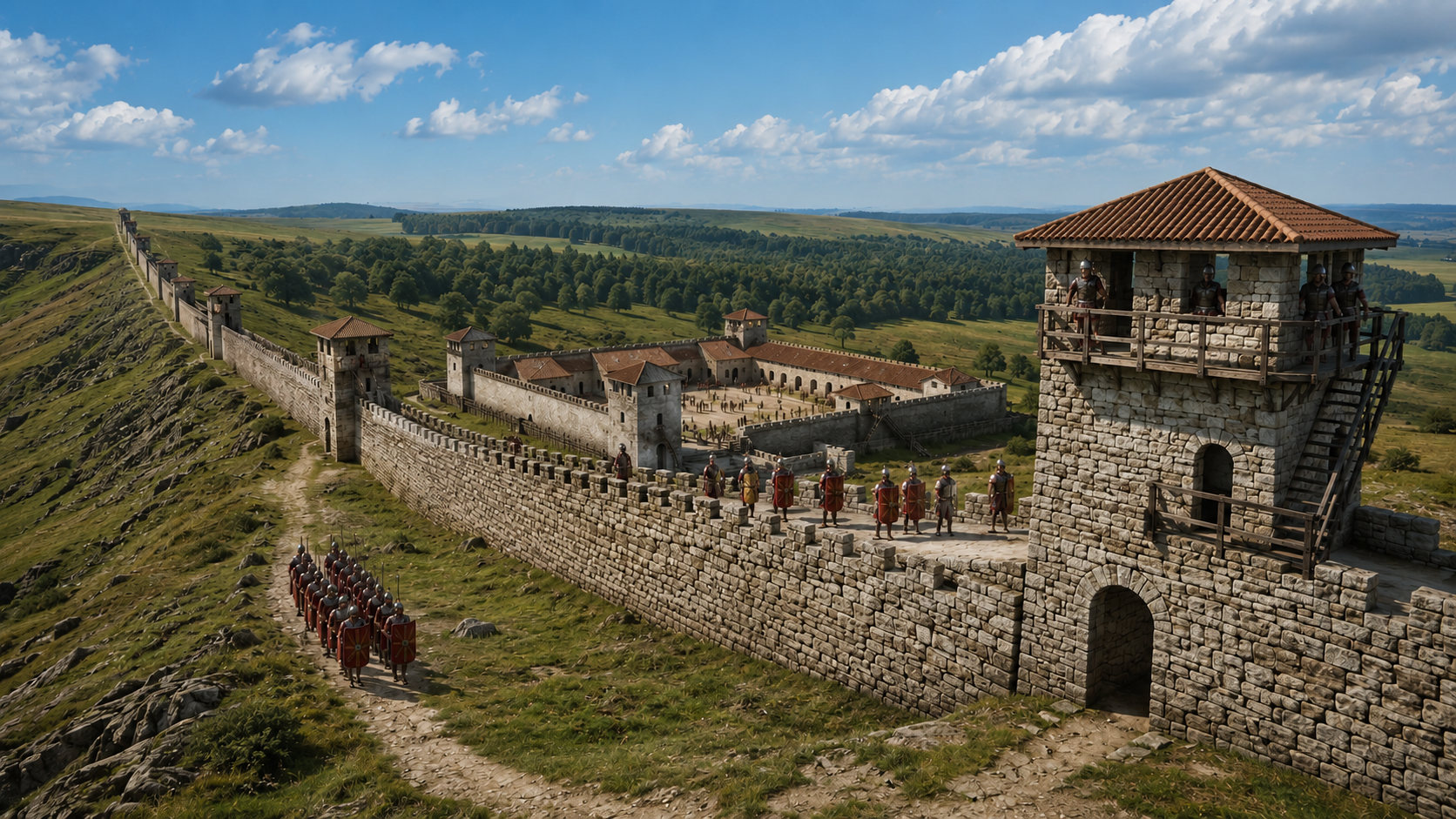
Antonine Wall
Length: 60 km, height: 3.50 m, width: 4.2 m, forts: 16–20
This frontier was abandoned in AD 163
This frontier was abandoned in AD 163
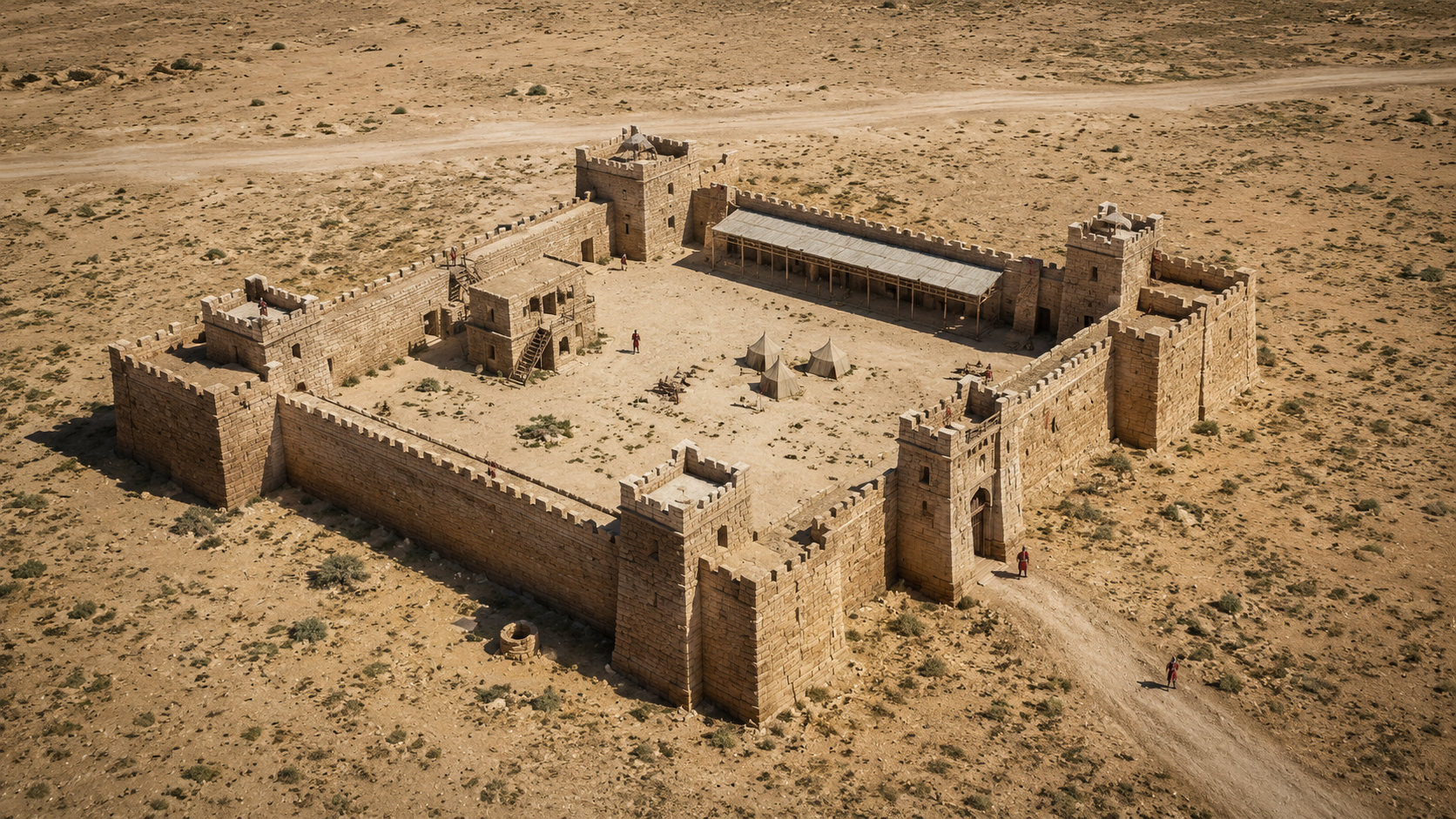
(Orient)
Orient
Approx. 1,500 km of frontier surveillance with countless forts and outposts
Unlike the massive palisades and walls in Germania or Britannia, the Roman frontier in the Orient (often called the Limes Orientalis or Limes Arabicus) was not a continuous physical barrier, but a deeply layered, highly flexible surveillance and defence system. It extended for more than 1,500 kilometres from northern Syria along the Euphrates down to the Red Sea.
Unlike the massive palisades and walls in Germania or Britannia, the Roman frontier in the Orient (often called the Limes Orientalis or Limes Arabicus) was not a continuous physical barrier, but a deeply layered, highly flexible surveillance and defence system. It extended for more than 1,500 kilometres from northern Syria along the Euphrates down to the Red Sea.
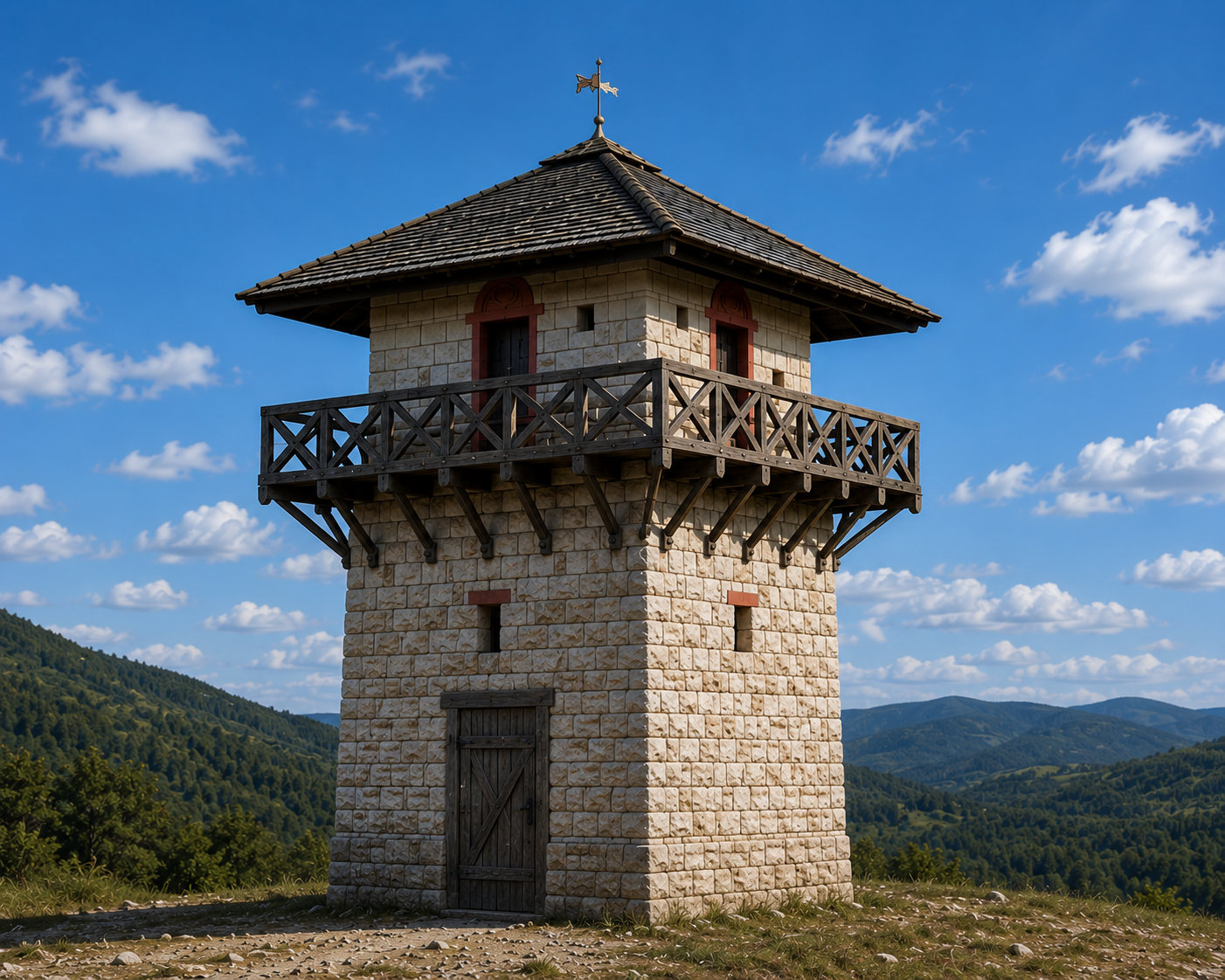
Typical frontier tower
With a garrison of 10–20 men